









A patient advocate helps a Medicare patient navigate disability benefit documents and deadlines.
1 in 4 Americans become disabled before age 65, but the Social Security Administration approves only 36% of SSDI applications on the first try. A patient advocate - which refers to a benefits specialist, attorney, nurse, or trained navigator who works the disability system on your behalf - changes that math by building an airtight evidence file before SSA, a private insurer, or a state program ever renders a decision. The MAP Model covered in this guide shows exactly how to match the right advocate to the right claim.
Questions this article answers:
The Short Answer
A patient advocate is a trained navigator - an attorney, nurse, social worker, or benefits specialist - who helps you apply for SSDI, SSI, VA disability, or private long-term disability benefits and prevents the paperwork failures that cause most denials. The SSA approves only 36% of initial SSDI applications. An advocate who sets the correct onset date, secures RFC documentation, and prepares you for a Social Security consultative exam changes that outcome before the first decision is ever made.
A patient advocate is a trained professional who navigates the disability benefits system on a claimant's behalf - which means that when an insurer misquotes your physician's notes, misses a deadline, or denies a medically valid claim, there is someone in the room who knows exactly what to do next. The Social Security Administration, state disability programs like California SDI, private long-term disability insurers, and the Department of Veterans Affairs each operate under separate rules, timelines, and evidence standards. Getting them right is not intuitive.
Disability benefits advocacy is not a single service. An attorney fighting an ERISA appeal is doing something fundamentally different from an SSA-approved representative filing an SSDI application. A physician who became disabled - like an orthopedic surgeon who lost his ability to operate after a snowboarding accident - needs a financial planner who understands own-occupation disability policy clauses, not a general patient navigator. The right match depends on the program, the claim stage, and the specific way the claim was denied.
This guide maps all five disability benefit programs, explains the documented reasons claims fail at each stage, and gives you the seven-step action sequence that patient advocates use to prevent administrative errors from overriding legitimate medical eligibility.
What types of disability benefits can a patient advocate help you navigate?
There are five main disability benefit programs in the United States. Each has different eligibility rules, timelines, and deadlines - and the advocate who helps with one is not always equipped to handle another.
An analysis of 20 sources shows that the disability benefit landscape divides into two distinct systems: federal programs administered by the Social Security Administration and the Department of Veterans Affairs, and private or state programs governed by ERISA and individual state law. A common misconception is that all disability claims work the same way. The reality is each program has a separate application process, a different evidence standard, and its own appeals pathway. Choosing the wrong advocate type - or filing under the wrong program - can cost you months of lost income and reset your claim to zero.
Use the MAP Model - Match, Apply, Prepare - before you do anything else. Match your situation to the right benefit program. Apply with a representative who knows that program's rules from the inside. Prepare your evidence to the standard that program actually uses to approve claims - not the standard you think is fair.
Here is how the five programs differ:
SSDI (Social Security Disability Insurance) is the federal program for workers who paid into Social Security through payroll taxes. Your medical condition must be expected to last at least 12 months or result in death. You can file for SSI at the same time online at SSA.gov. SSA may contact you directly after submission to confirm your intent to file.
SSI (Supplemental Security Income) is needs-based. It does not require prior work history. It covers people with limited income and assets who are disabled, blind, or over 65. SSI can be applied for simultaneously with SSDI.
VA Disability Compensation covers veterans with a service-connected condition. According to Allsup Veterans Appeals, many veterans eligible for VA disability are also eligible for SSDI - but the two systems require separate applications, separate medical evidence, and separate adjudication. A 100% VA rating does not qualify you for SSDI automatically.
Private Long-Term Disability (LTD) is employer-sponsored coverage governed by ERISA. According to disability attorney Ben Glass, 1 in 4 Americans become disabled before age 65 - yet most do not read their group policy until a denial letter arrives. Group plans are more restrictive than individual policies and often cap benefits for mental health or chronic pain at two years without radiographic evidence.
State Disability Programs vary significantly. California's SDI program, for example, requires claimants to file within 49 days of becoming disabled. The treating provider must submit medical certification within 30 days. Missing either deadline can disqualify the claim regardless of medical eligibility.
Why do so many disability claims get denied in the first place?
Most denials are not about whether you are disabled. They are about paperwork errors, missed deadlines, and a system that processes nearly 1.9 million applications a year with shrinking staff.
The national average for SSDI approval at the initial application stage is 36%. That means 64 out of every 100 applicants are denied the first time. The approval rate at the reconsideration stage drops further - to approximately 13.3%. Those who survive reconsideration and request a hearing face a wait of 12 to 16 months before an administrative law judge reviews their case. The takeaway: the initial filing is the single highest-volume, highest-impact intervention point in the entire process.
As Brian Therrien of The Disability Digest has documented across nearly two decades of SSDI advocacy, "There's 1.9 million people that applied for disability last year and Social Security - if you can make your case stand out it's only going to benefit you and your approval odds." In practice, standing out means building a complete and consistent file before SSA ever opens it - not correcting it after a denial letter arrives.
The three most common reasons SSA contacts applicants after submission are: a missing medical release form (SSA-827), incomplete work or medical activity information on Form e3368, and unsigned forms. According to SSA's own guidance published by the Social Security Administration, these administrative failures are the leading cause of processing delays - not disputes about medical eligibility.
State disability programs add a second layer of tight deadlines. California's SDI program requires claimants to file within 49 days of becoming disabled. "If you wait more than 49 days to submit your form, you will be disqualified." The treating provider must also submit medical certification within 30 days - separately, and independently. "Eligibility is determined once we receive your form. This process can take up to 14 days." A claimant who files on day 40 but whose provider misses the 30-day certification window can still lose benefits.
According to The Disability Digest's live advocacy Q&A sessions, even veterans with 100% Permanent and Total VA disability ratings face this same bureaucratic gauntlet at SSA. The VA and SSA run separate adjudication systems. A VA rating does not substitute for SSA's own medical evaluation. In the words of disability advocate Brian Therrien: veterans with 100% P&T ratings, "especially PTSD, are some of the most difficult cases to get approved - it's been my two decades of experience."
Deadlines do not pause for grief, illness, or confusion about which form to file. An advocate's first job is making sure none of these administrative traps end your claim before it begins.
What happens when the system misreads your medical records - or denies a valid claim?
Some disability denials are not about your diagnosis. They are about how a reviewer interprets - or misinterprets - your doctor's notes against a standard your doctor never agreed to.
Consider what happened in one documented short-term disability case: a woman employed at a major law firm fell into depression, was diagnosed by her primary care physician, and applied for disability leave through her employer's insurance plan. The insurer denied the claim on the grounds that her records showed "minimally abnormal mental status exam findings" and no visible signs such as "psychomotor agitation or retardation, deficits in grooming or eye contact... intractable crying spells." Her physician responded in writing that this was a "misinterpretation and fabrication of my previous notes." In practice, the insurer had substituted a visible-distress checklist for the documented clinical diagnosis. After an arduous appeal process that dragged on for months, she prevailed - but only after assembling a team that included her therapist, physician, and pro bono attorneys. Without those resources, she wrote, she might have given up. The takeaway: the appeals process itself functions as a denial mechanism for claimants who cannot sustain the fight.
According to reporting from The 19th, a nonprofit newsroom covering gender, politics, and policy, Kathy Quitno-Bolt is cited as a grieving family member whose Social Security survivor benefit processing was disrupted in 2026. "People with disabilities have also reported extensive delays to access Social Security disability payments" - delays the reporting attributes to DOGE (Department of Government Efficiency) staffing cuts at the Social Security Administration. In practice, a system with reduced staff processing 1.9 million applications per year becomes one where a missing form or incomplete record does not trigger a correction request - it triggers a denial.
The structural problem is not unique to insurance companies or federal agencies. Author Christina Beach Thielst, a former hospital administrator who developed a rare disease, describes exactly this dynamic in her own medical journey. She experienced a 7.5-month delay in diagnosis and treatment before her insider knowledge of the healthcare system allowed her to advocate past the fear and desperation and find a physician who could help. Her conclusion: "Others were struggling with disability insurance or their insurance companies." For patients without her background, the outcome is often different.
Misread records do not fix themselves. Delayed payments do not catch up automatically. An advocate's role in these situations is to identify the discrepancy, respond in writing before the appeal window closes, and document that the record was corrected. None of this happens on its own.
What does a patient advocate actually do for a disability claim?
An advocate does not just fill out paperwork. They build the evidence file, track deadlines, coordinate with your doctors, and represent you if the claim is denied.
The specific tasks vary by advocate type - and the type that helps you most depends on where you are in the process. According to Rebecca Stafford's healthcare navigation guide published on Medium, there are at least six distinct categories of patient advocate, each with different training backgrounds, costs, and institutional loyalties. Special needs advocates - the broader category that includes disability benefit navigators - come from diverse professional backgrounds: parents, educators, therapists, social workers, and legal professionals, as noted in a guide published Dec 22, 2023 by Love Educational Consulting. This diversity is the field's strength and its challenge. It means there is almost certainly someone qualified to help you - but finding the right match requires knowing what each type actually does.
For SSDI applicants, the practical task list looks like this:
- Setting the correct disability onset date - the date your condition became severe enough to prevent substantial gainful activity, not simply the date of diagnosis
- Requesting a Residual Functional Capacity (RFC) report from your treating physician before SSA schedules its own consultative exam
- Filing Form SSA-1696 to formally appoint your representative so SSA communicates with them directly
- Gathering third-party evidence: statements from family members, employers, or caregivers who can document your functional limitations
- Monitoring the application through the pending period and responding to any SSA requests within the 30-day window
- Preparing you for an independent medical exam if SSA schedules one
- Tracking the appeal ladder so you never miss a reconsideration or hearing deadline
According to Brian Therrien of The Disability Digest, the biggest mistake applicants make is submitting their application and then waiting passively. "This is where most people make the biggest mistakes in my opinion," he has said - framing the pending period as the highest-impact window in the entire claim. The takeaway: an advocate who works the pending period actively is not a luxury. What this means for unrepresented claimants: the outcome gap between represented and unrepresented applicants opens before the first decision is ever made.
For private long-term disability claims, the task list shifts. Legal Advocates (Healthcare Attorneys) charge $250-$500 per hour and are best suited to ERISA-governed group plan appeals - the kind where an insurer has formally denied a claim and you have 180 days to respond in writing. Medical Billing Advocates... fees typically 25-35% of money saved - and their scope is limited to billing disputes and overpayment recovery, not full disability claim management.
Condition-specific organizational advocates - through programs like the Alzheimer's Association or the National Organization for Rare Disorders - are free or low-cost but limited to one disease area. They cannot attend medical appointments, and their services end at the organization's defined scope. Hospital-based advocates are free, but their loyalty runs to the hospital, not the patient. In practice, knowing which type of help you need before you call is the single most time-saving step in a process where time directly costs money.
Which type of patient advocate is right for your disability situation?
The right advocate type depends on what you are fighting. SSA paperwork requires a different skill set than an employer insurance appeal, and a general patient navigator is not the same as a disability attorney.
Three real-world situations show how differently the advocate match-up plays out:
Situation 1: The employer insurance denial. Vivia Chen, employed by Bloomberg Law, applied for short-term disability after a diagnosed episode of depression in summer 2023. Her insurer denied the claim, citing "minimally abnormal mental status exam findings" - a standard that contradicted the treating physician's documented diagnosis. According to Chen's published account of the experience, the appeal required a therapist letter, physician rebuttal, pro bono legal help, and months of effort. What she needed was not a general patient advocate. She needed a healthcare attorney who understood how ERISA-governed plans deny mental health claims and how to counter the specific criteria insurers use. In practice, a general patient advocate would not have known to challenge the insurer's misquotation of physician notes. The takeaway: for private insurance appeals, legal expertise is not optional - it is the differentiating factor.
Situation 2: The physician who became a patient. Dr. Jay Foley, orthopedic surgeon, was disabled in a snowboarding accident that ended his surgical career. He held an own-occupation disability policy - meaning he could still see patients in an office setting while collecting disability benefits. What he needed was not a billing advocate or a general navigator. He needed a financial planner who understood own-occupation clauses and a career consultant who could redirect his medical expertise. He eventually found that path through medical-legal expert witness work, but noted that professional societies like the AAOS "could do a better job helping senior doctors, or doctors that might be disabled to recreate their life." In practice, there is almost no institutional support for physicians navigating disability from a specialized professional role. The takeaway: the higher your prior income and the more specialized your occupation, the more mismatched generic advocacy becomes.
Situation 3: The family caregiver navigating for a parent. Special needs advocates - the broader category that includes those who help seniors navigate Medicare and disability - come from diverse professional backgrounds: parents, educators, therapists, social workers, and legal professionals. Article published Dec 22, 2023 by Love Educational Consulting makes the case that these advocates share one core function regardless of background: "amplifying the voices of individuals with disabilities and working to remove systemic barriers." For a caregiver trying to file SSDI on behalf of a parent, the most relevant credential is process fluency - knowing the online SSA system, the forms, and the deadlines - not a law degree. An SSA-approved representative who works on contingency at the hearing level costs nothing out of pocket until you win.
Knowing which situation matches yours before you start calling advocates saves weeks. It also saves money - because the most expensive advocate is not always the most effective one for your specific claim.
What steps should you take right now if you think you need a disability advocate?
Start before you feel ready. Filing the application first and gathering documentation during the pending period is the correct sequence - not the reverse.
Here is the seven-step plan, in order:
- Identify your benefit program. SSDI, SSI, VA disability, private long-term disability, or a state program like California SDI. Each has a separate application, separate evidence standard, and separate advocate type. Confirm which program applies before you call anyone.
- File the application immediately - do not wait for medical records. SSA's own guidance says: "Do not delay submitting an online claim because you are waiting to obtain medical records." The best method is online at SSA.gov. For state programs like California SDI, According to EDD guidance, "You must submit your disability benefits form within 49 days of becoming disabled. If you wait more than 49 days to submit your form, you will be disqualified." Both clocks start from the day you became disabled.
- Appoint a representative immediately if you have one. An advocate or attorney can submit the application on your behalf through the SSA's online system, but they cannot electronically sign it. Only you can e-sign or provide verbal confirmation when SSA calls. File Form SSA-1696 online to formally designate your representative - this routes SSA communication through them and protects you from missed notices.
- Verify contact information on the application. Wrong phone numbers and mailing addresses are a leading cause of missed SSA follow-up. Confirm both fields before submitting and notify SSA immediately if either changes.
- Use the pending period to build the evidence file. Request your Residual Functional Capacity (RFC) report from your treating physician. Collect third-party statements. If you use wearable devices like an Apple Watch or Oura ring, export the sleep and activity data - it can document functional limitations that physician notes do not capture in enough detail for SSA reviewers.
- Prepare for the consultative exam before it is scheduled. Do not go alone. Bring a witness who can document what happens in the exam room. Bring your full medical history. Your word against the examiner's is an unequal contest - documented presence changes that dynamic.
- If you receive a denial, count your appeal window immediately. For SSDI, request reconsideration in writing. For ERISA-governed employer insurance plans, you have 180 days from the denial letter to file a formal appeal. In one documented case, a claimant who received a denial based on a misquoted physician's note prevailed - but only after months of written back-and-forth, physician letters, and legal support. The system counts on claimants giving up. Starting the clock on day one of the denial prevents that.
An advocate's value is highest at steps 2, 5, 6, and 7 - the moments where documentation errors, missed deadlines, or unequal information exchanges determine outcomes before any adjudicator renders a formal decision. Getting the right person involved at step 1 sets every subsequent step up to succeed.
Are there free patient advocate services covered by Medicare?
Medicare does not pay for private patient advocates. But free and low-cost options do exist - and most people navigating disability never hear about them.
Here are the free options available to Medicare beneficiaries and disability claimants:
- SHIP (State Health Insurance Assistance Program) - federally funded counselors who help Medicare patients navigate coverage questions and benefits at no cost. Call 1-877-839-2675 to reach your state's SHIP program.
- SSA-approved disability representatives - attorneys and non-attorney representatives who work on contingency at the SSDI hearing level, collecting no fee until you win. Fees are capped by federal law at 25% of back pay, up to $7,200.
- Hospital-based advocates - free at discharge, but their loyalty runs to the institution rather than the patient. They cannot continue helping after you leave.
- Condition-specific nonprofit advocates - organizations like the Alzheimer's Association and the National Organization for Rare Disorders offer free support, but only within their disease area and generally cannot attend medical appointments on your behalf.
- State legal aid programs - for low-income applicants, state legal aid offices sometimes provide free representation for SSDI appeals and ERISA-governed private insurance denials.
Free help exists. The gap is that claimants who most need it are also least likely to know it exists before the appeal window closes. According to the documented experience of one disability claimant who ultimately prevailed against her employer's insurer, it took pro bono legal support, physician letters, and months of appeals to reverse a denial - resources she acknowledged many claimants would not have access to. The system benefits from that imbalance. Knowing the free options before you need them changes it.
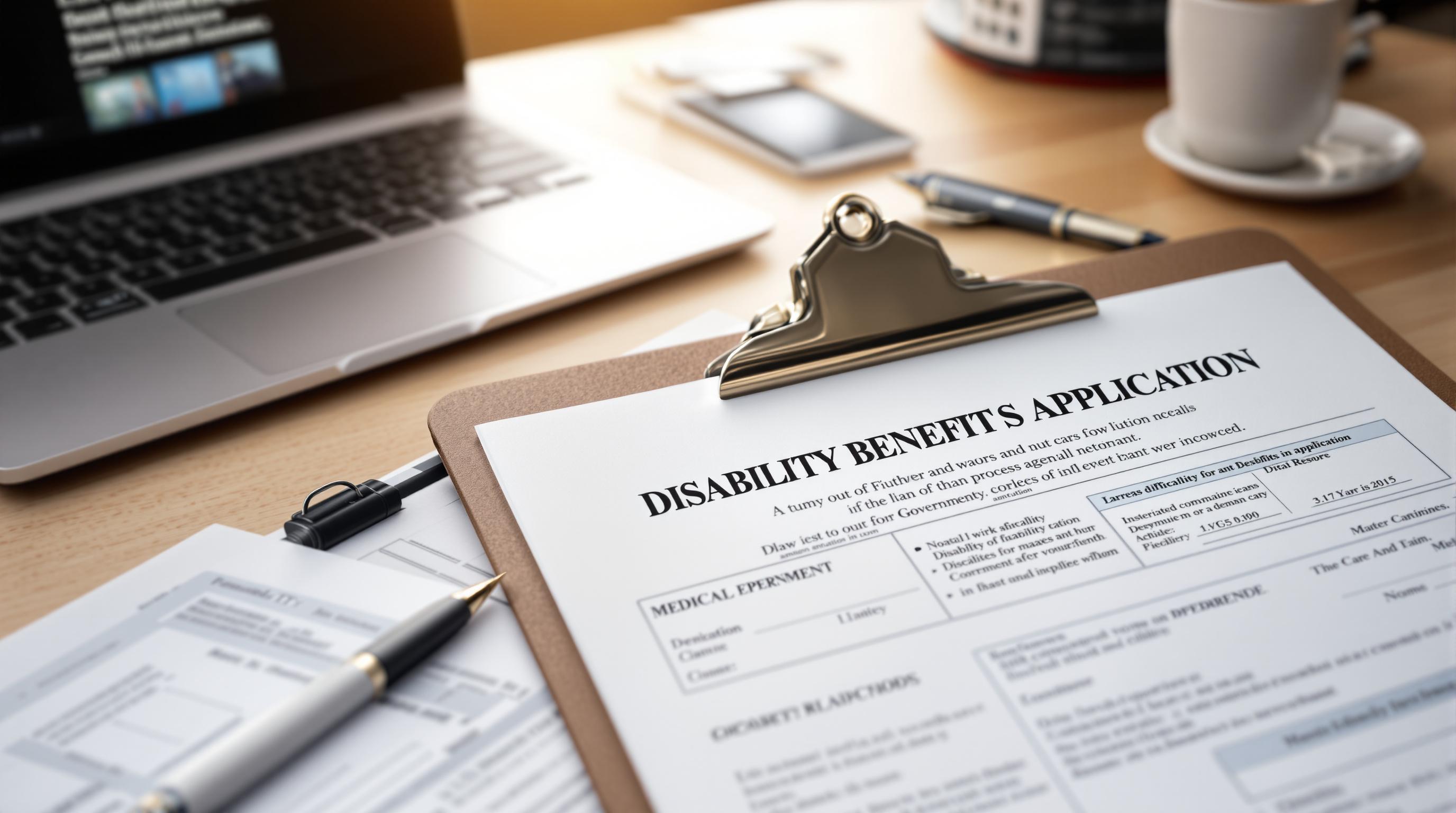
How does the disability claims process differ with and without a patient advocate?
The difference is rarely about eligibility. It is about whether the file is complete, timely, and documented to the standard the adjudicator actually uses.
| Without an advocate | With an advocate |
|---|---|
| Onset date set to diagnosis date, not the date of functional impairment - leaving months of back pay unclaimed | Onset date established at the earliest provable point of work-preventing limitations |
| RFC form never requested; SSA schedules its own consultative exam on its own terms | RFC submitted by treating physician before SSA exam; examiner reviews a documented baseline |
| SSA-827 missing; claim stalls while SSA sends follow-up notices the claimant doesn't recognize | All required forms submitted on the same day as the application; representative designated via SSA-1696 |
| Claimant attends consultative exam alone; their account of limitations is the only record | Witness present to document the exam; full medical history brought; wearable device data included |
| State program deadline missed - California SDI requires filing within 49 days of disability onset | Application filed within days; provider certification tracked to ensure the 30-day medical window is met |
| Denial letter arrives; claimant gives up, unaware the 180-day ERISA appeal window has started | Denial triggers immediate written response; physician letter challenges any factual misrepresentations in the denial |
The before column is not hypothetical. According to one documented disability insurance case, a claimant who received a denial stating her depression showed "minimally abnormal mental status exam findings" eventually won on appeal - but only after her physician wrote to the insurer that its analysis was a "misinterpretation and fabrication of my previous notes." That correction happened because she had the resources to pursue it. Most claimants do not.
What will matter most for disability benefit claimants in the next 12-24 months?
The disability landscape is shifting in three ways that most claimants - and most general patient advocates - do not yet see coming.
The dominant assumption is that advocates matter most after a denial. The evidence points elsewhere. With SSA staffing under pressure from federal budget cuts and initial approval rates already at 36%, the highest-value intervention is moving to the application stage - before any decision is made. Advocates who can set onset dates, secure RFC documentation, and prepare claimants for consultative exams before the file lands on a reviewer's desk will drive better outcomes than those who specialize only in appeals. If that shift accelerates, the current advice to "hire help after you're denied" will cost represented claimants months of waiting and lost back pay.
| Signal | What to watch for | Why it matters |
|---|---|---|
| SSA processing capacity shrinks further (12-18 months) | Reports of SSDI payment delays tied to federal staffing cuts are already surfacing in 2026. The reconsideration approval rate sits at 13.3% - meaning the hearing stage carries disproportionate weight. | Advocates who work the application stage, not just the hearing stage, will close the largest outcome gap. This is where volume is highest and preparation matters most. |
| Private insurers tighten mental health denial criteria (12-24 months) | One documented case shows a private insurer denying a depression claim by citing absent "psychomotor agitation or retardation" despite a treating physician's documented diagnosis - then misquoting the physician's notes in the denial letter. | Documentation strategy, not diagnosis alone, now determines outcomes for depression, anxiety, and chronic pain claims. An ERISA attorney who can counter the specific denial language is the right type of help - not a general navigator. |
| Veterans pursue dual VA+SSDI benefits as a distinct advocacy category (12-24 months) | National advocacy firms are already segmenting veteran outreach around dual-benefit (VA disability + SSDI) positioning. Veterans with 100% P&T ratings, particularly for PTSD, often do not qualify automatically for SSDI despite the VA rating. | Content and services that address veteran-specific advocate needs - including SSA's separate psychiatric consultative exam requirement and the Wounded Warrior expedite pathway - will capture growing search demand that generic "Medicare advocate" content does not. |
Here is what most claimants miss: the disability benefits system is not a single system. It is five separate programs with five different evidence standards, five different appeal processes, and five different advocate types. The physicians, attorneys, nurses, and social workers who specialize in disability advocacy each have expertise in a slice of this landscape - not all of it. Matching the right expert to the right claim before filing is the single highest-leverage decision in the entire process.
Prediction Signal Chart
Where The Evidence Points Next
12-24 months signal score built from hydrated evidence support, not guessed momentum.
Over the next 12-24 months, the disability benefits landscape will see a widening processing gap at the Social Security Administration that pushes more applicants and survivors toward third-party advocates, while private insurers continue tightening claim approvals on subjective… These are the three signals with the strongest support in the current evidence library.
Support-weighted signal score
Sources: newsapi, YouTube, YouTube
Counter-signal: YouTube
Sources: Substack, whitecoatinvestor.com
Counter-signal: ojmgroup.com
Forward signal
Weak Signals Driving This Prediction
- Reports of extensive SSDI payment delays tied to DOGE cuts are already surfacing alongside the existing 36% initial-approval rate and the 1…
- The Vivia Chen case shows Lincoln Financial denying a documented depression claim by citing absent clinical signs the treating physician sa…
- Allsup is publicly tying Vietnam-veteran outreach to dual-benefit (VA + SSDI) positioning - an early signal that the larger advocacy firms…
The conventional wisdom is that hiring a patient advocate or attorney only matters after a denial. The contrarian read: with initial SSDI approval rates already at 36% and SSA staffing capacity eroding, the unrepresente… Use the chart as a screening aid, not as a certainty machine.
What would change this forecast: A reversal in SSA staffing cuts, a federal mandate requiring insurers to apply objective-evidence standards uniformly, or Medicare adding a covered patient-advocate benefit category would each materially weaken the case…
Methodology: authority-weighted support score from hydrated evidence
Key Takeaways
- Only 36% of SSDI applications are approved on the first try. Most denials are caused by paperwork failures, not medical ineligibility - which is exactly what an advocate prevents.
- Five different benefit programs operate under separate rules. SSDI, SSI, VA disability, private long-term disability, and state programs each require a different advocate type and evidence strategy.
- Free options exist. SHIP counselors (1-877-839-2675) are federally funded. SSA-approved representatives work on contingency with no upfront cost until you win at the hearing level.
- Private insurer denials for mental health claims require a legal specialist, not a general advocate. ERISA appeals have a hard 180-day deadline from the denial letter date.
- Filing first matters more than filing completely. SSA advises not to delay submitting online while waiting for medical records - the pending period is when evidence is built, not before submission.
The disability benefits system approves fewer than 4 in 10 initial SSDI applications - not because most claimants are ineligible, but because the system is built around documentation standards that most applicants do not know exist until after they have already failed to meet them. The advocate's role is shifting. It used to be primarily about appeals. With SSA processing capacity under strain and new pressures on state programs like California SDI's 49-day filing window, the intervention that matters most now happens before the application is submitted.
Disability advocacy works best when it is matched to the specific claim. A physician navigating an own-occupation insurance dispute, a widow trying to access Social Security survivor benefits during a system backlog, and a senior fighting an employer insurer's "you don't look sick enough" denial are each fighting a different battle. The advocate type, cost, and timeline differ in each case. Knowing which situation applies to you is step zero.
The next step is simple. Call 646-904-4027 to speak with UnderstoodCare's advocacy team. The call is free. You will leave with a clear answer about which type of help your situation requires - and which, if any, of the free options covers you.
If you are unsure which benefit program applies to your situation - or whether you need an attorney, a representative, or a general advocate - UnderstoodCare's team at 646-904-4027 can help you figure that out before you file anything.
How UnderstoodCare Can Help You Navigate Disability Benefits
Navigating a disability claim is a process with hard deadlines, multiple programs, and adjudicators who respond to documentation - not desperation. UnderstoodCare's advocacy team includes doctors, nurses, and benefits specialists who help Medicare patients understand their options, organize their files, and push back when a denial is wrong.
Call 646-904-4027 to speak with an advocate. The call is free, and we will tell you honestly which type of help your situation requires - whether that is our team, a legal specialist, or a free SHIP counselor.
Frequently Asked Questions
Are there free patient advocate services covered by Medicare?
Medicare does not currently pay for private patient advocates - professionals who navigate disability claims and benefits on your behalf. However, free options exist: SHIP (State Health Insurance Assistance Program) counselors are federally funded and available at no cost by calling 1-877-839-2675. SSA-approved representatives also work on contingency at the SSDI hearing level, with fees capped by federal law.
Can a patient advocate help me file a disability application online?
Yes. An advocate or helper can complete and submit the SSDI application online at SSA.gov on your behalf. However, only the applicant can electronically sign it or provide verbal confirmation when SSA calls. Advocates typically also file Form SSA-1696 to formally designate themselves as your representative so all SSA communications route through them.
What is the difference between SSDI and SSI?
SSDI (Social Security Disability Insurance) is for workers who paid into Social Security through payroll taxes and whose medical condition is expected to last at least 12 months. SSI (Supplemental Security Income) is needs-based and does not require prior work history. Both can be applied for simultaneously online at SSA.gov.
What if my employer's insurer denies my disability claim for depression or anxiety?
Private insurers governed by ERISA have a 180-day appeal window after a denial. Some insurers deny mental health claims by citing absent visible-distress criteria that contradict how treating physicians document depression. An ERISA attorney - not a general patient advocate - is the right type of help here. Document the denial letter immediately and start the appeal clock on the day you receive it.
Who are the most trusted Medicare patient advocacy organizations in the U.S.?
According to Love Educational Consulting's overview of disability advocacy, advocates come from diverse backgrounds - parents, educators, therapists, social workers, and legal professionals - and there is no single ranked list that applies across all claim types. Federally funded SHIP counselors, SSA-approved non-attorney representatives, and organizations like the Alzheimer's Association or the National Organization for Rare Disorders are among the most widely available and independently verified free options for Medicare patients.